An Email That Found Me Extremely Well
There are two very different inboxes in my life. There is my personal inbox, which usually contains things I have forgotten to unsubscribe from, things asking me for money, and the occasional email I open purely because the subject line has frightened me.
And then there is my work inbox. That one I open with the optimism of someone checking whether they have accidentally won something. So while “I hope this email finds you well” may be one of the more aggressively overused sentences in modern communication, I can confirm that this particular email found me extremely well.
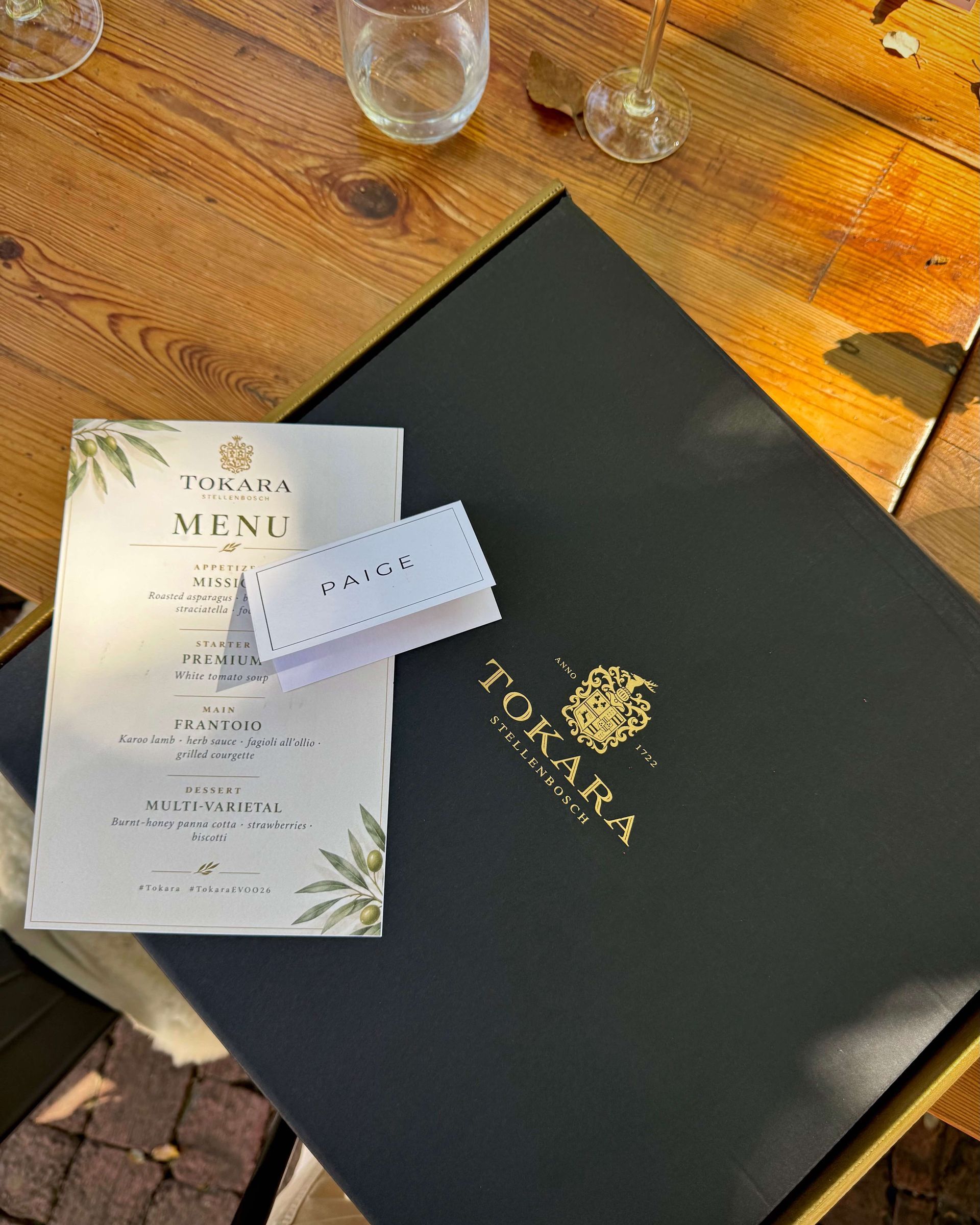
It was an invitation from Tokara to celebrate their 2026 olive oil harvest with a guided tasting of the new season’s extra virgin olive oils, followed by a farm-to-table lunch at Good to Gather. A tasting. A long lunch. Olive oil. Stellenbosch. Best believe I cleared my very busy ‘schedule’ immediately.
“Every awkward house party has the person who disappears to sit with the dog. I had alpacas. Frankly, an upgrade.”
Two Birds, One Very Olive-Oil-Covered Stone
Both Tokara and Good to Gather had been sitting firmly on my ‘I really need to get there’ list for some time, so being introduced to both at once felt rather efficient. Two birds, one very olive-oil-covered stone.
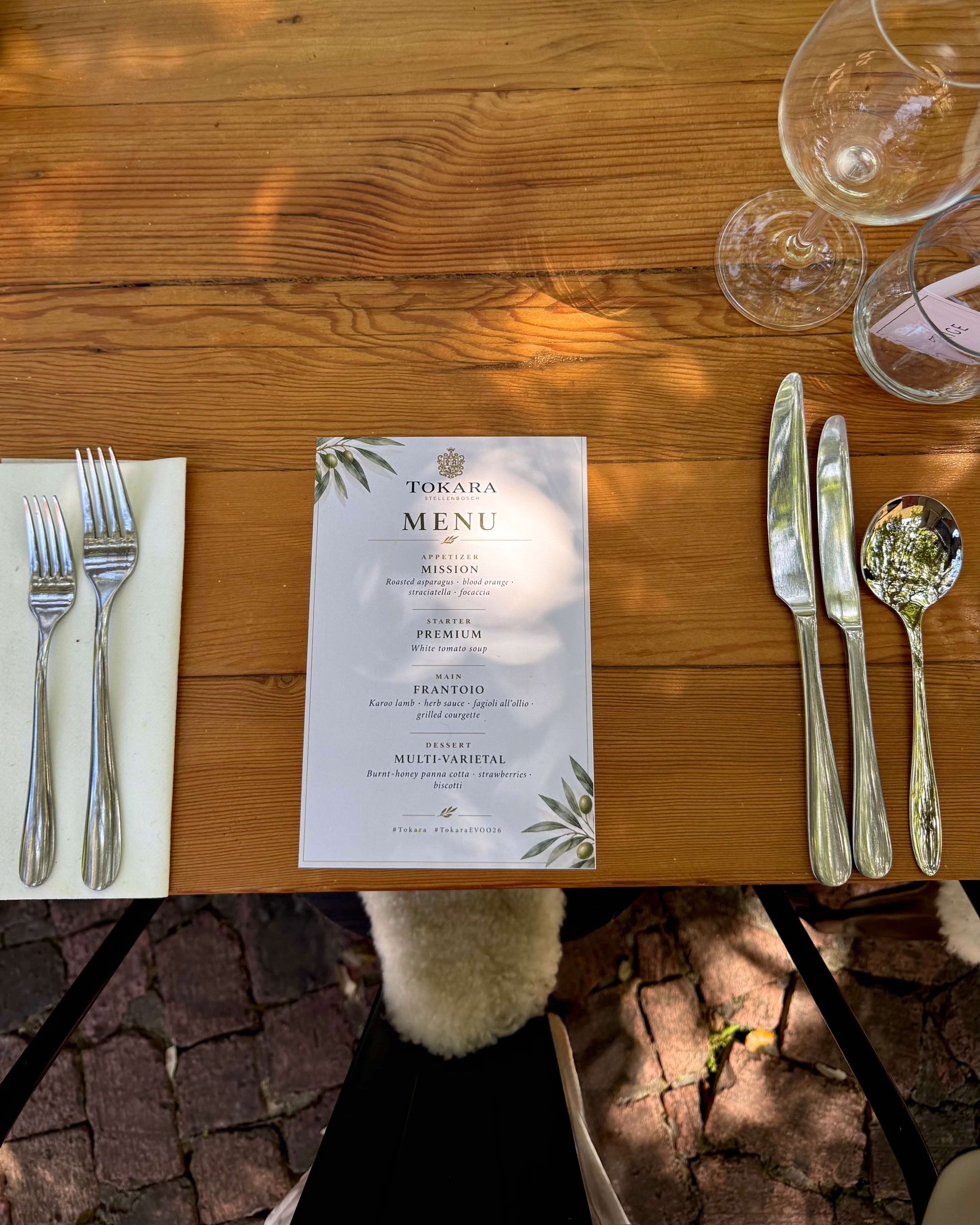
The idea behind the afternoon was simple but clever. We would first taste Tokara’s 2026 extra virgin olive oils on their own, then sit down to a seasonal menu by Chef Jess Shepherd, with each course designed to showcase a different oil. As someone who has absolutely been guilty of treating olive oil as something you drizzle over things and call it a day, I was intrigued.
There is always that tiny moment when you arrive somewhere alone and think, Right. Lovely. What if everyone else knows each other? Fortunately, I’m an inconvenient mixture of introvert and extrovert: perfectly happy dining alone, equally happy being dropped at a table of strangers and seeing what happens. Food helps. Maybe wine too.
Alpacas: The Emergency Social Plan
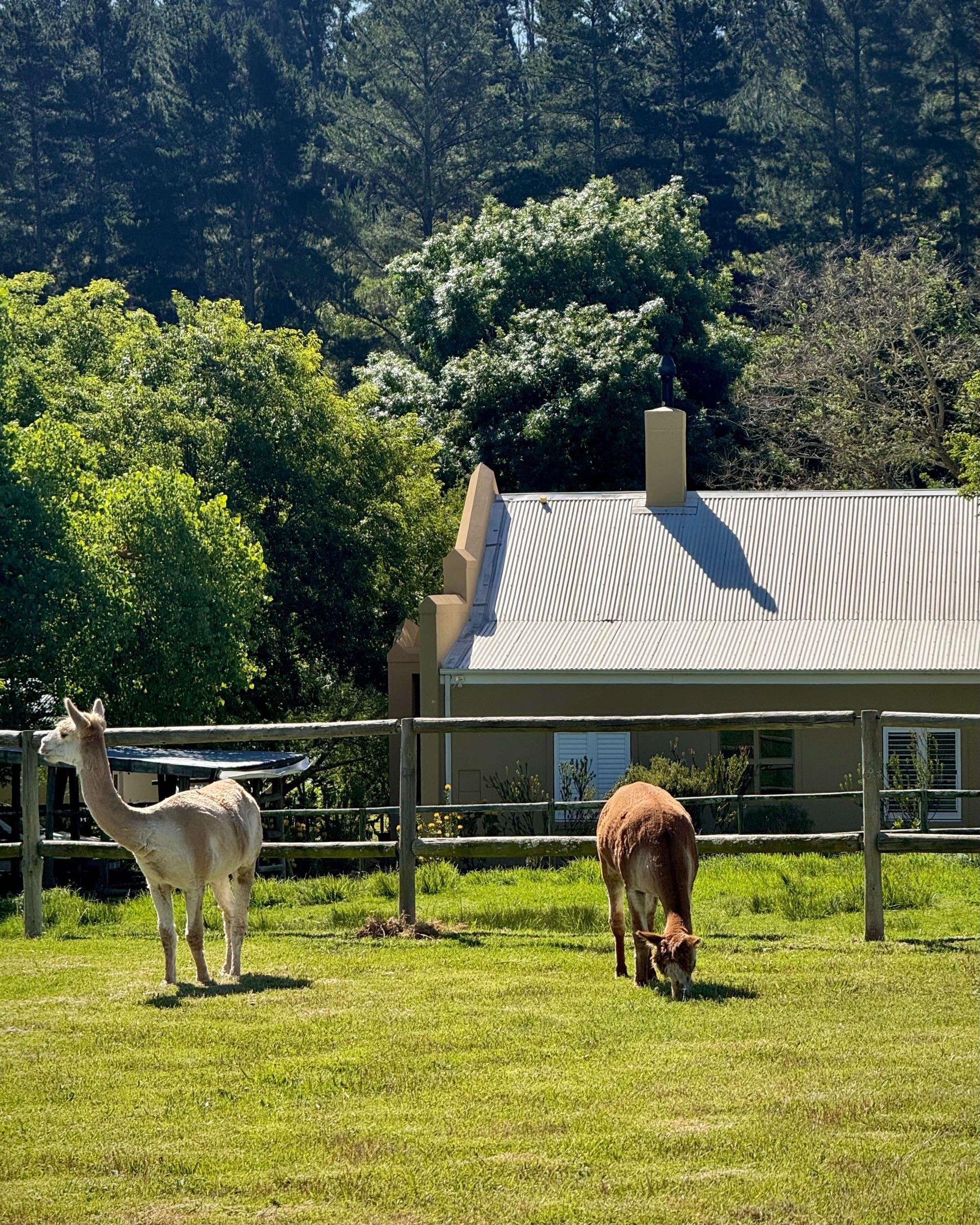
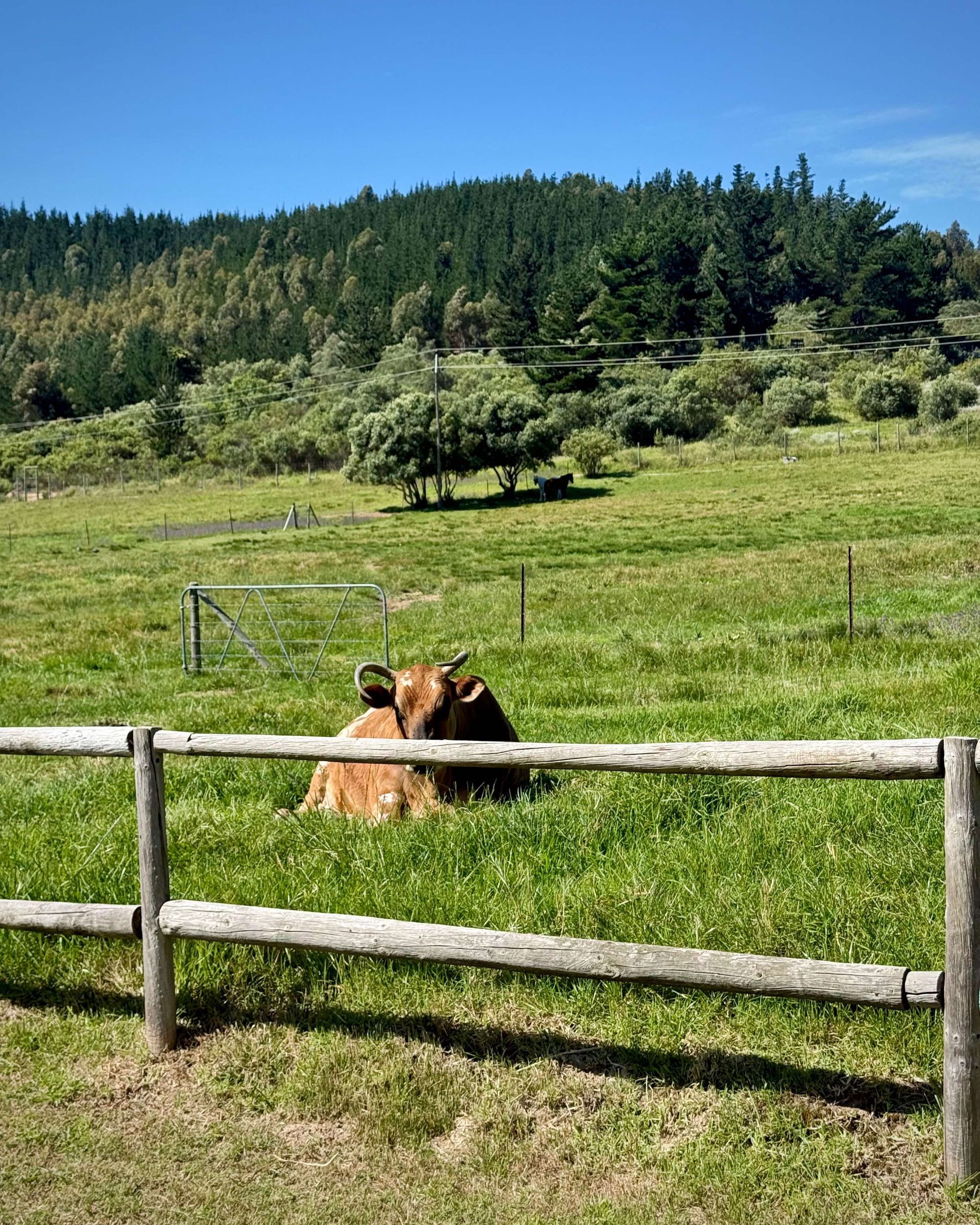
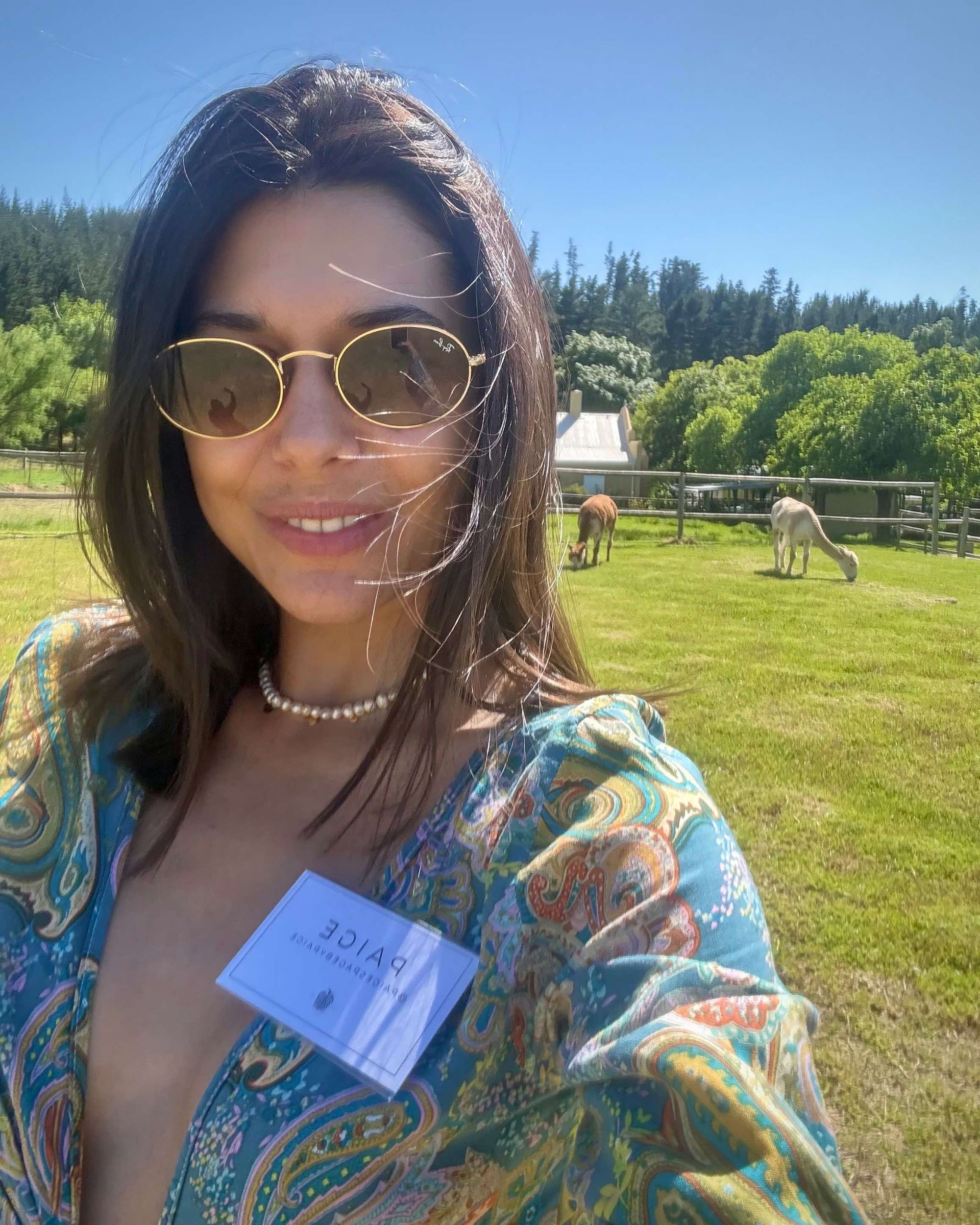
I arrived at Rozendal Estate to one of those ridiculously tranquil Stellenbosch settings that immediately makes Cape Town feel much further away than it actually is: trees, open space, cows and, most importantly, alpacas watching me arrive with the expression of animals who had seen all this before. If the social situation became disastrous, I had a backup plan. Every awkward house party has the person who disappears to sit with the dog. I had alpacas. Frankly, an upgrade.
Follow the Food Smell
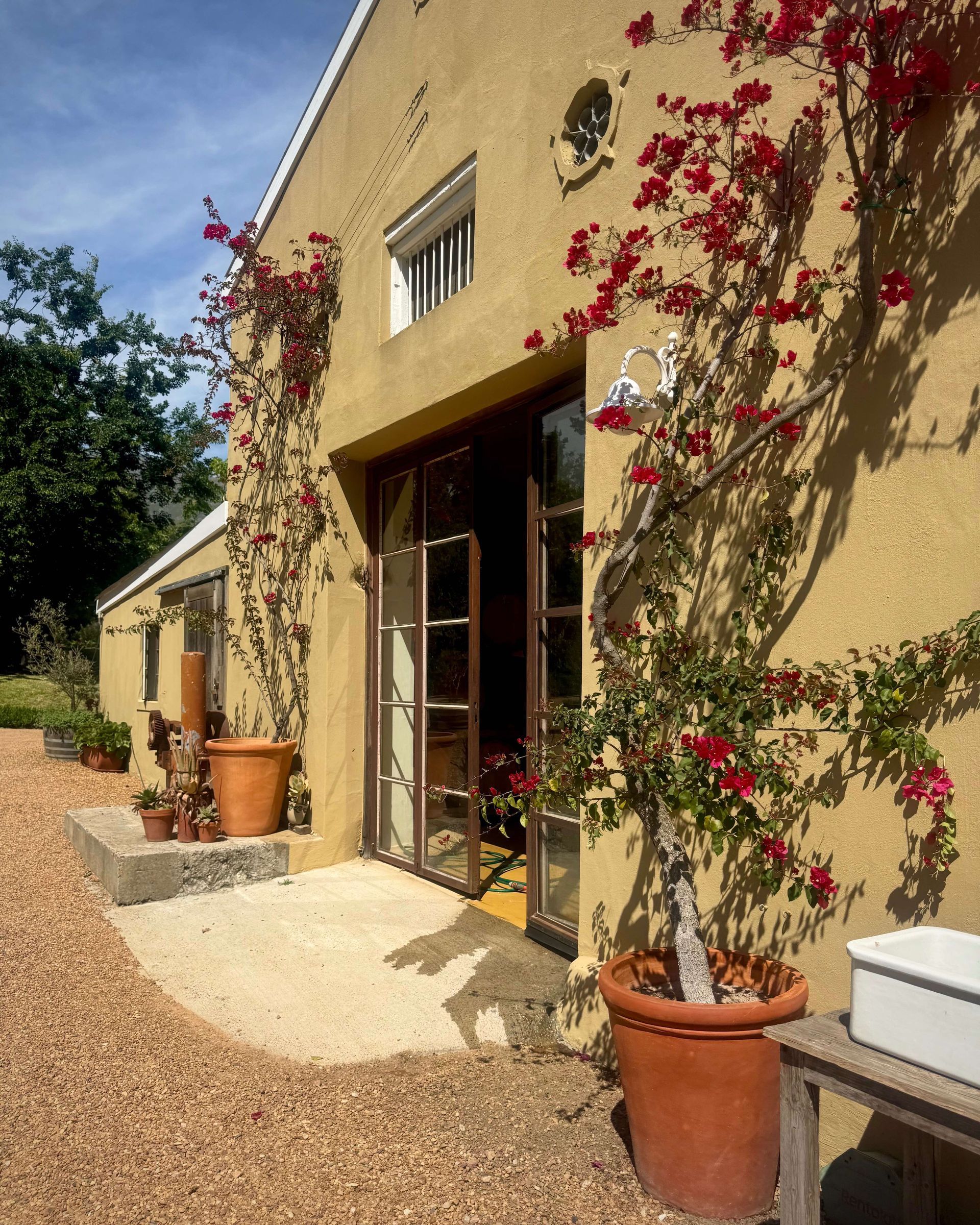
For a brief second I wondered whether I was in the right place. Then I spotted the sign. More importantly, I smelled balsamic vinegar. Slightly confusing at an olive oil tasting, admittedly, but I decided not to overthink it.
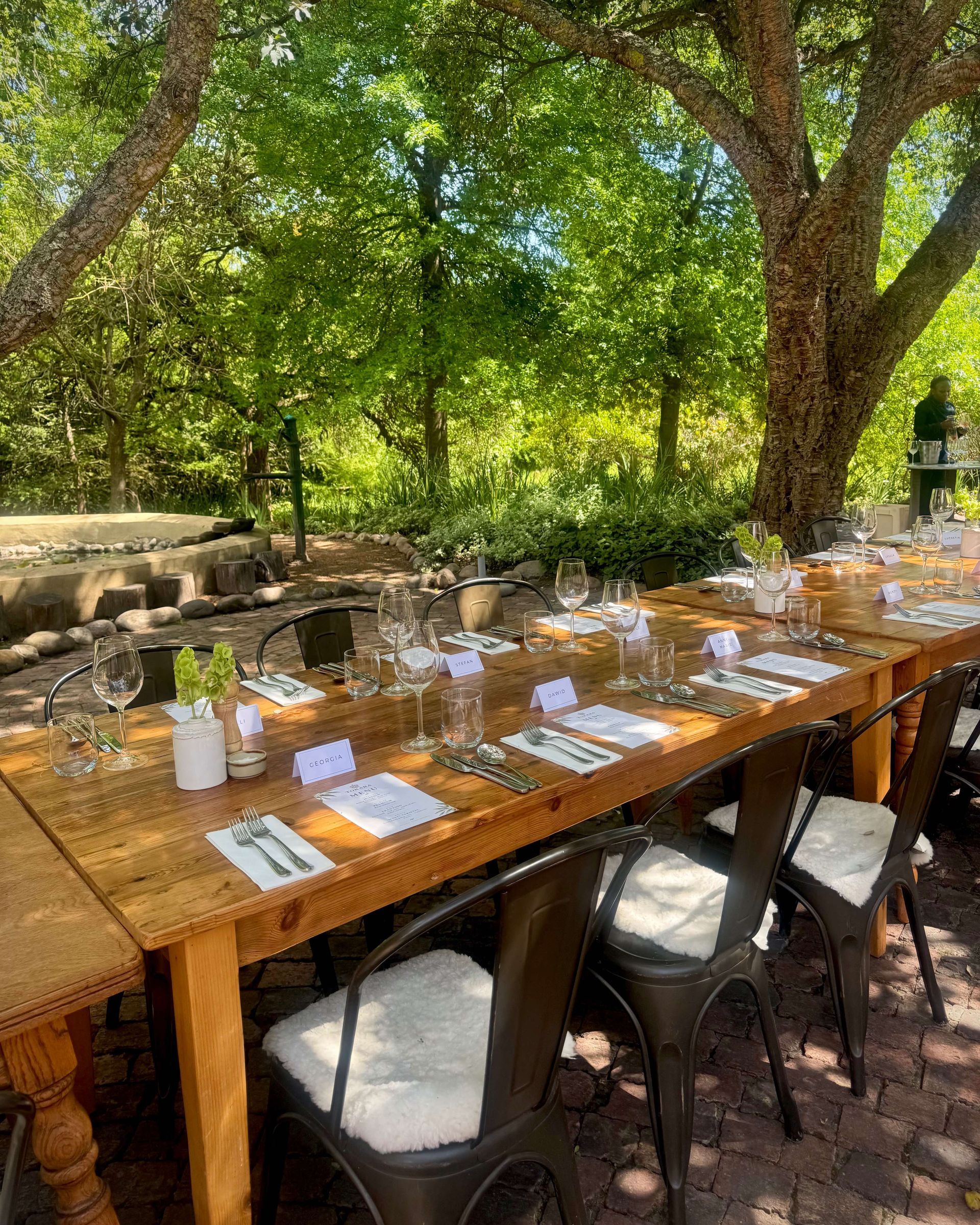
My general philosophy is that if something smells like food, follow it. And if all else fails, follow the actual sign. So I did. And in a very cartoon-like fashion, followed the smell around the corner to the most beautiful long table beneath the trees. People were already gathering, glasses were being poured, conversations were starting, and whatever tiny arrival anxiety I had disappeared fairly quickly because everyone was immediately so warm. I was gently pointed towards a jug of rosé sangria. Excellent start.
An 11am Drink Is Basically Wellness
Now, this may shock anyone who has ever eaten with me: I did not photograph the sangria. I know. Deeply concerning. In my defence, everyone was so immediately warm that I picked up my glass and started talking to people instead. Very wholesome of me. That set the tone. Small group, easy conversation, none of the awkward hovering around pretending to be fascinated by your phone until someone rescues you. The sangria helped.
It was light, crisp, fruity and very cold, with enough fresh fruit floating around to convince you that an 11am drink was basically wellness. A little tangy, a little sweet and dangerously appropriate for the hour. ‘Rosé all day’ suddenly felt less like something printed on a tote bag and more like a perfectly respectable scheduling decision.
Apparently Olive-Oil Tasting Is a Skill
And so, sangria in hand and social anxiety rapidly disappearing, we chatted for a while before being called inside. Which is where I discovered that I have spent 27 years consuming olive oil without apparently knowing that olive-oil tasting is an actual skill.
If you have never done an olive-oil tasting before, firstly, welcome. Neither had I. Secondly, do one. Because there is considerably more involved than pouring some into a bowl, dipping bread into it and declaring yourself cultured. Although we did eventually get to the bread.
Apparatus. Method. Results. Conclusion.
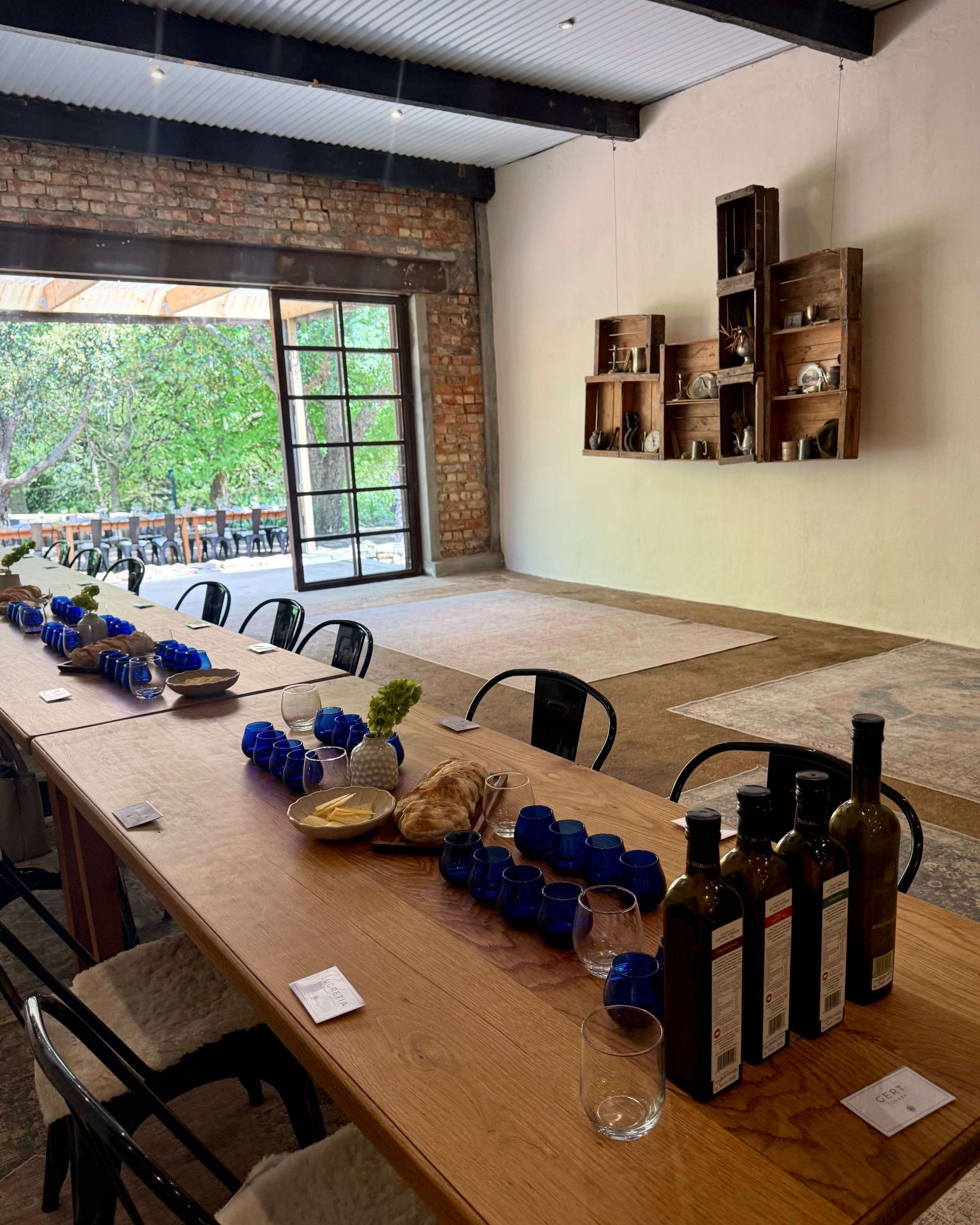
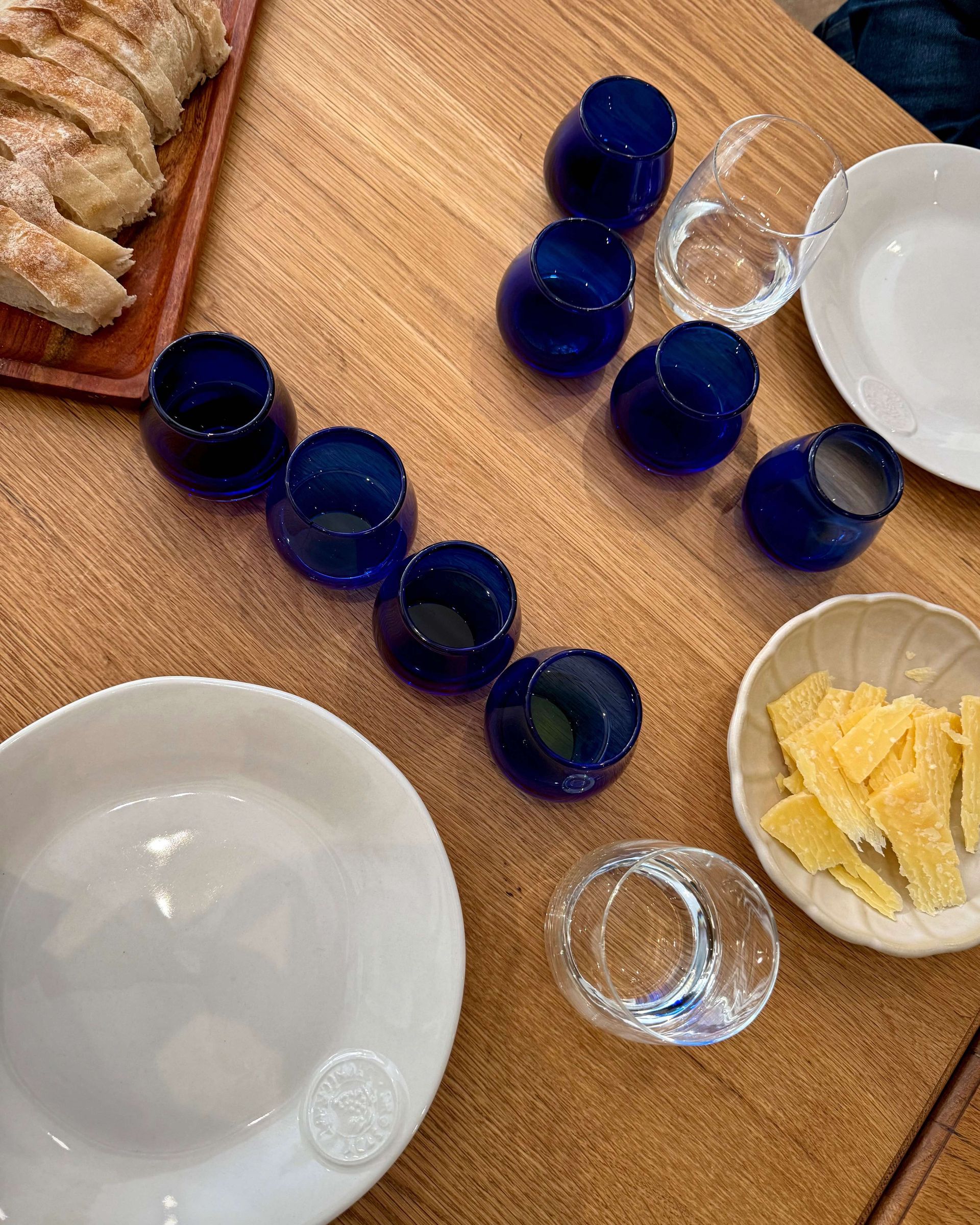
We took our seats in front of a rather intimidating little army of cobalt-blue glasses. The blue is intentional: professional olive-oil tasting glasses are dark so colour cannot influence the sensory assessment. Essentially, they remove the opportunity for your eyes to start giving your mouth unsolicited opinions. Already, we were getting scientific. I had sudden flashbacks to school practicals. Apparatus. Method. Results. Conclusion.
Somewhere, a Natural Sciences teacher was finally getting her revenge. Fortunately, nobody handed me a worksheet. Instead, we were talked through the proper way to taste an extra virgin olive oil.
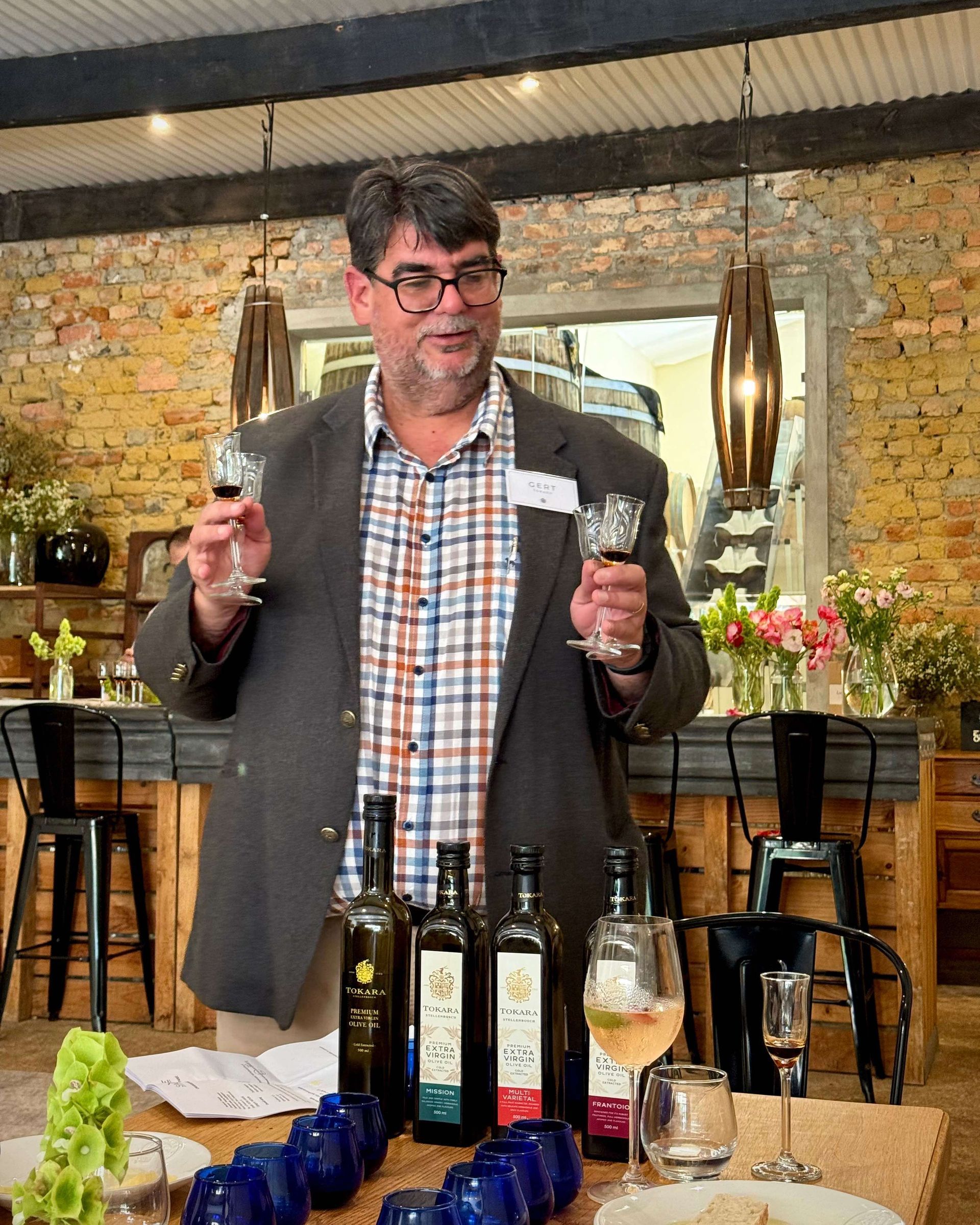
You cup the glass in your hands to gently warm the oil and release its aromas, smell it properly, then take a small sip, moving it around your mouth and drawing in a little air. From there, you start noticing what tasters are actually looking for: fruitiness, bitterness and that peppery little hit, or pungency, towards the back of your throat. Essentially, wine tasting’s sober cousin. No hangover. Very civilised. Although Tokara is also a wine estate, so nobody here is campaigning against wine.
Olive Oil Has Personalities. Who Knew?
We moved through four of Tokara’s 2026 extra virgin olive oils: Frantoio, Multi-Varietal, Mission and Premium. This was where ‘olive oil tastes like olive oil’ stopped being a particularly convincing argument. Frantoio was more robust and herbaceous; Multi-Varietal fuller and fruitier; Mission sat at the gentler end, grassy and balanced; and Premium richer, pepperier and pleasantly bitter. I liked the first and last most. Apparently my olive-oil personality contains multitudes.
Somewhere between warming blue glasses in my palms and voluntarily sipping straight olive oil, I also realised how seriously Tokara takes this side of the estate. Anne-Marie Ferreira planted renowned Tuscan olive varieties more than two decades ago, and those mature groves now feed into Tokara’s own boutique mill, where the oils are cold-pressed using Italian equipment. Vineyards and olive groves have lived happily alongside one another across classic wine regions for centuries; Tokara has brought that relationship to Stellenbosch.
For Research Purposes. Obviously.
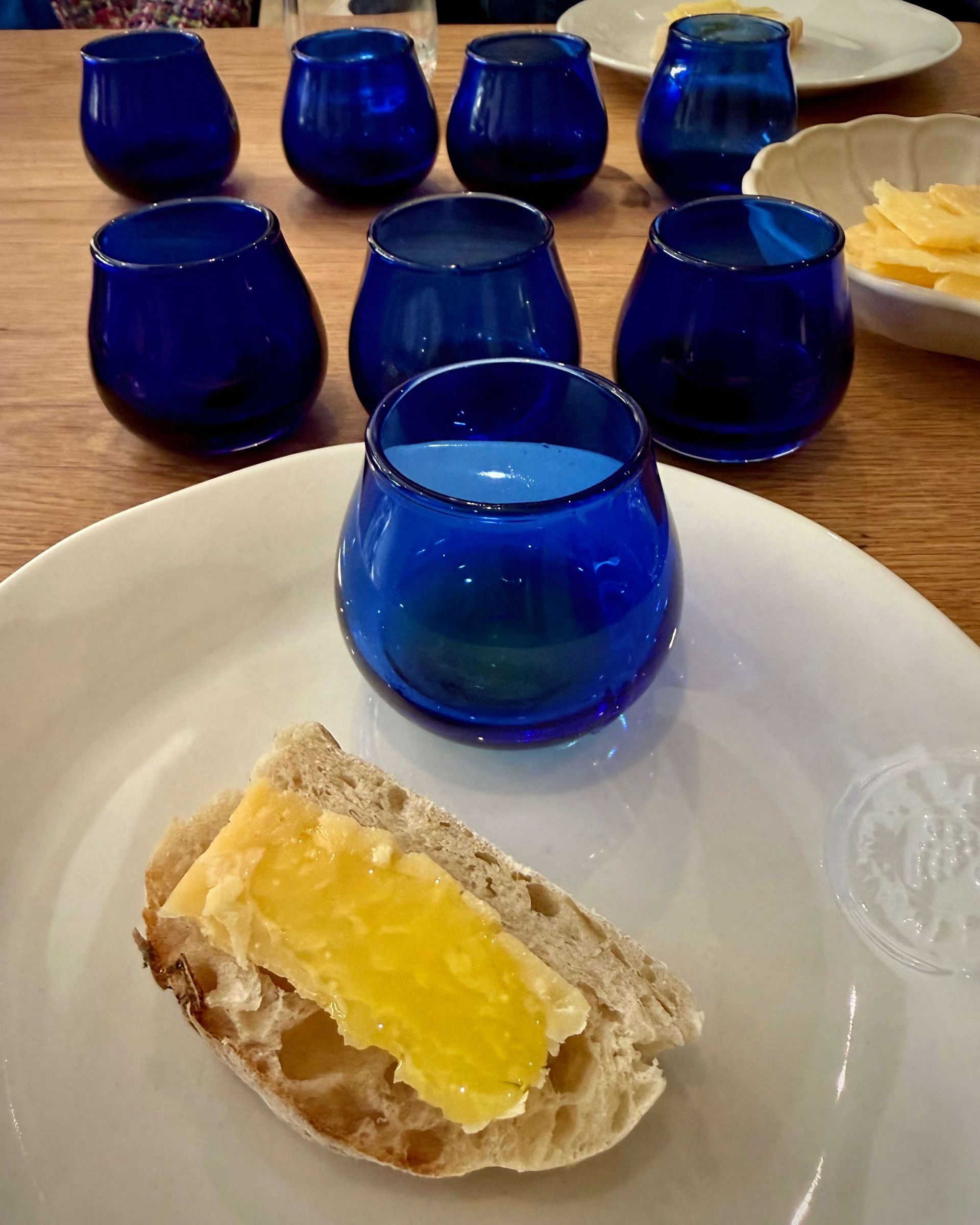
And because I am nothing if not committed to practical learning, the obvious next step in my education was bread. There was fresh bread on the table alongside shards of hard cheese, and after behaving very professionally through the tasting, I took a piece, added cheese and poured over the Premium. For research purposes. Obviously. The bread was soft, the cheese sharp and salty, and the Premium came through with richer fruit and that peppery finish. This was where the tasting clicked for me: on its own, you can analyse the oil. With food, you understand it.
Plot Twist: We’re Drinking Vinegar Now
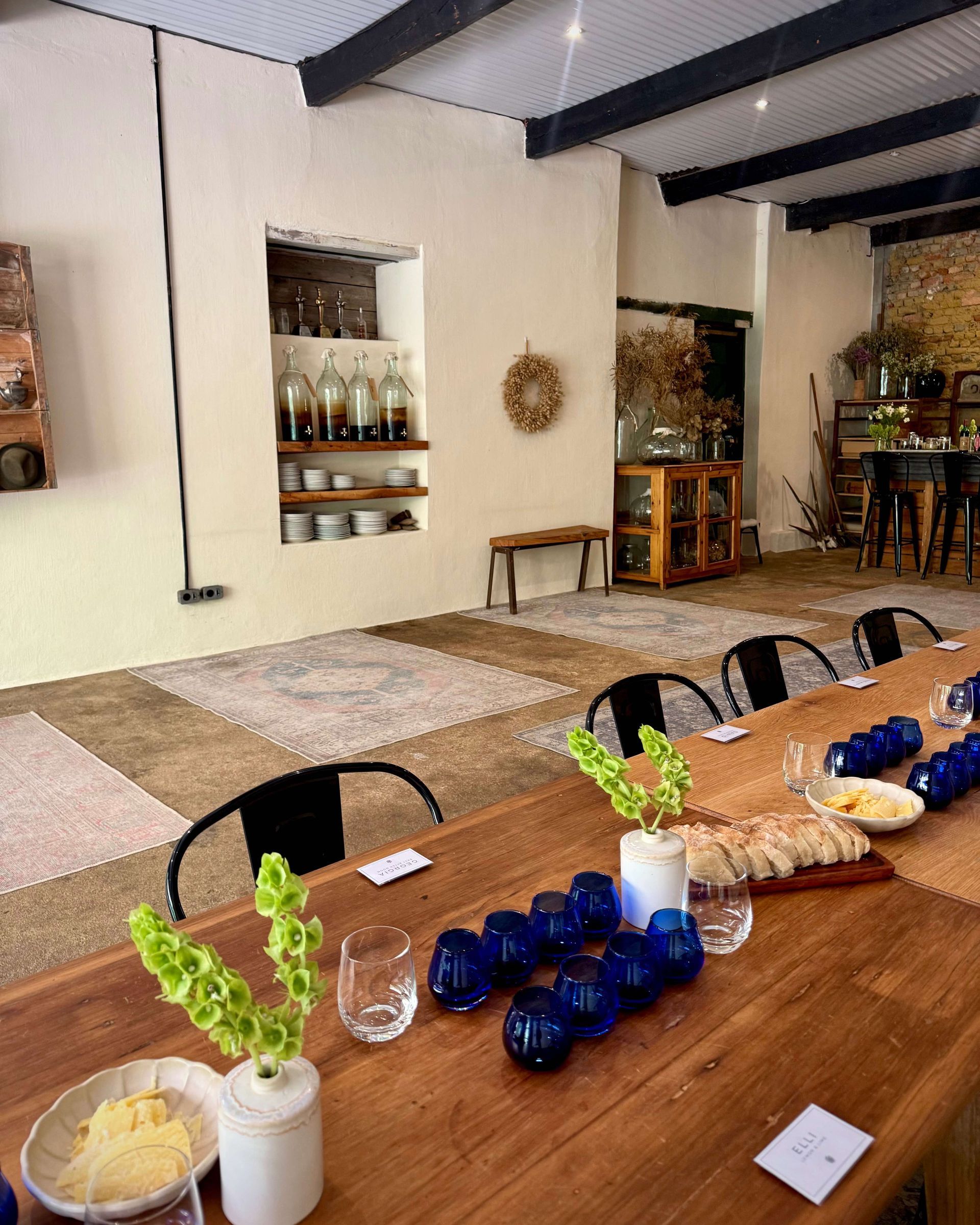
Good to Gather’s indoor dining space is Rozendal’s vinegar tasting room, and it feels exactly like somewhere you want to spend far too much of an afternoon: high ceilings, exposed brick, warm cream walls, black beams and huge doors opening onto the trees and courtyard. Rustic without trying to cosplay rustic.
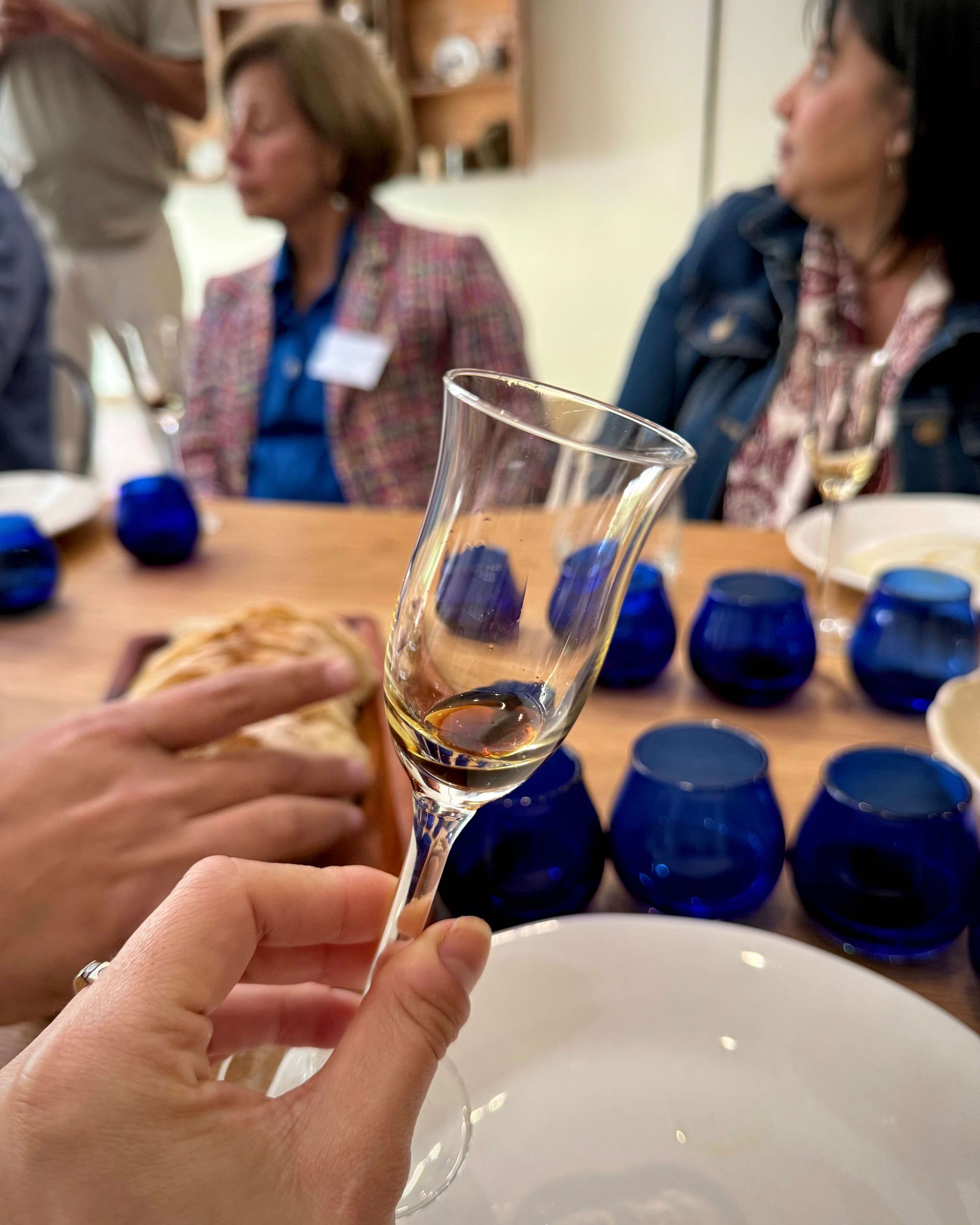
And then I noticed the vinegar. Ah. The smell. Mystery solved. Rozendal has been making vinegar on the farm for decades, naturally fermenting selected regional wines before ageing them in small oak casks. Which meant that after spending the morning learning how to drink olive oil, we naturally moved on to drinking vinegar. Thursday was very educational.
Perhaps There Were Signs
Little-known fact about me: I have always loved balsamic vinegar. As a child I was the person drowning things in it and occasionally taking a tiny sip straight from the bottle, which sounds mildly unhinged now that I have written it down. But look at me now. Food writer. Perhaps there were signs.
This one was sweet, sharp and concentrated, with this deep, winey richness that landed somewhere between balsamic vinegar and something almost port-like. Suddenly my childhood vinegar habit felt less embarrassing and more like early palate development.
Long, Lazy, Lingering
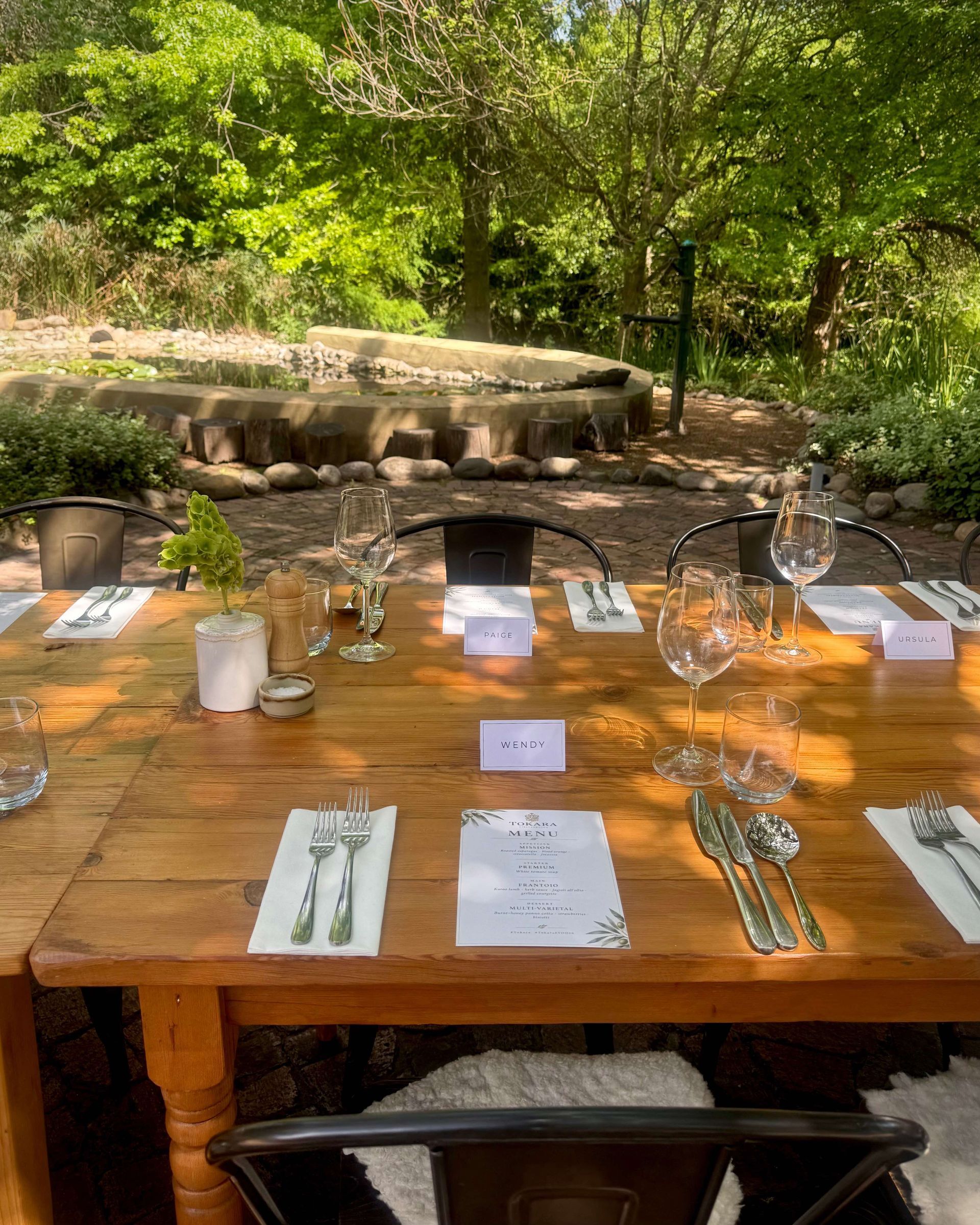
Then we drifted back outside to the sort of table that immediately makes you reconsider how you have been spending your weekdays: one long wooden table beneath the canopy, dappled sunlight, a little breeze and that particular Winelands quiet where everything feels slower.
The sort of spring lunch I always imagine exists somewhere in a European film: nobody checks the time, the wine stays cold, bread keeps appearing, someone has inevitably been sitting at the table for three hours and absolutely nobody is apologising for it. Long, lazy, lingering lunches. There. I found my three Ls.
A beautifully cold white wine appeared. I didn’t catch the bottle, so I’m not about to invent tasting notes and become a sommelier in hindsight, but it was crisp, refreshing and exactly what the setting required.
Olives Following Me Around
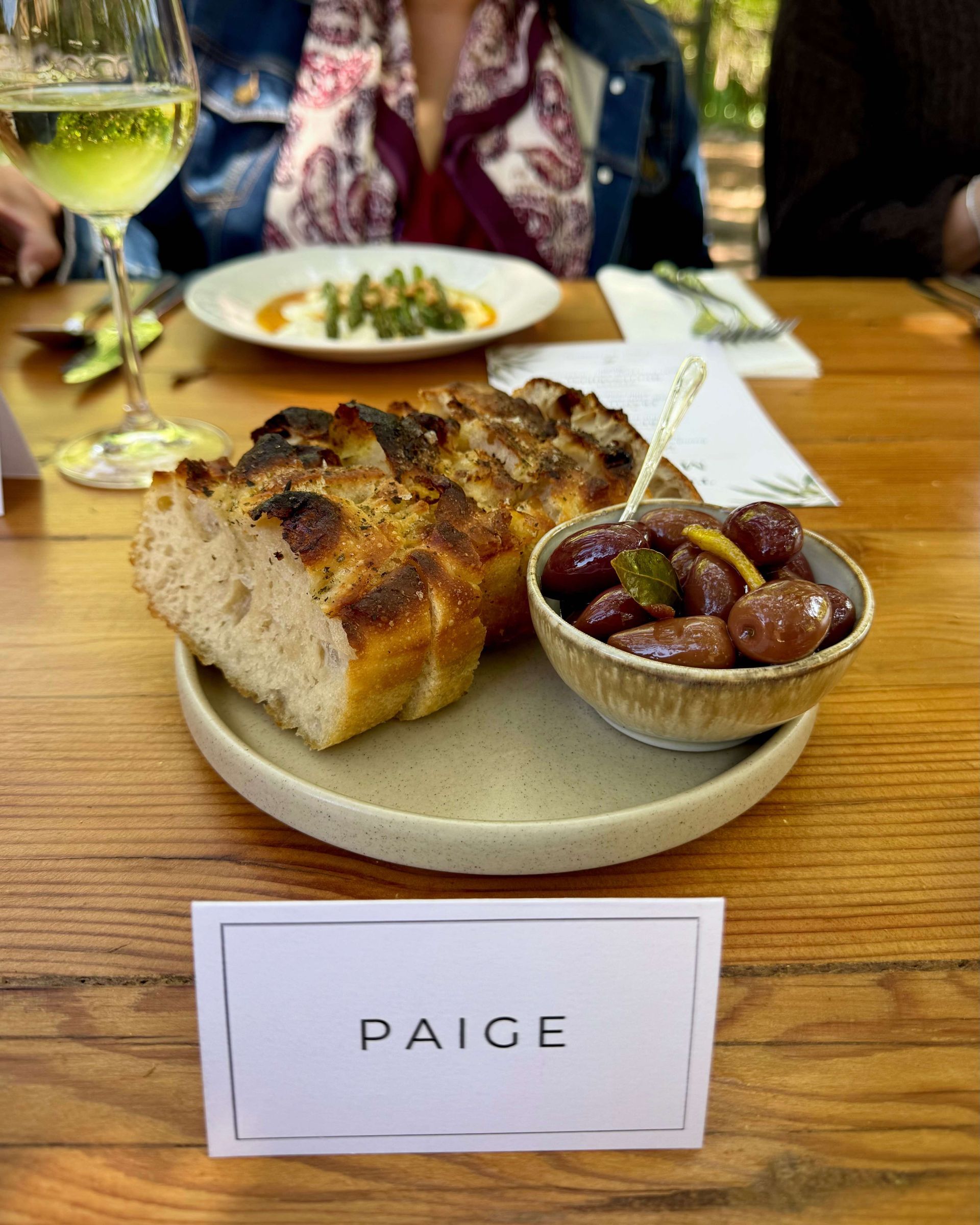
Then came focaccia. And olives. I mean, we were celebrating an olive harvest after all. If bowls of olives hadn’t been quietly following me around all afternoon, I would have had questions.
Mission: Make Me Understand Olive Oil
The appetiser was roasted asparagus with blood orange, stracciatella and Tokara’s Mission olive oil. Mission is the gentler member of the range. It’s grassy, herbaceous and deliberately delicate. Which meant it didn’t arrive demanding attention. It joined in.
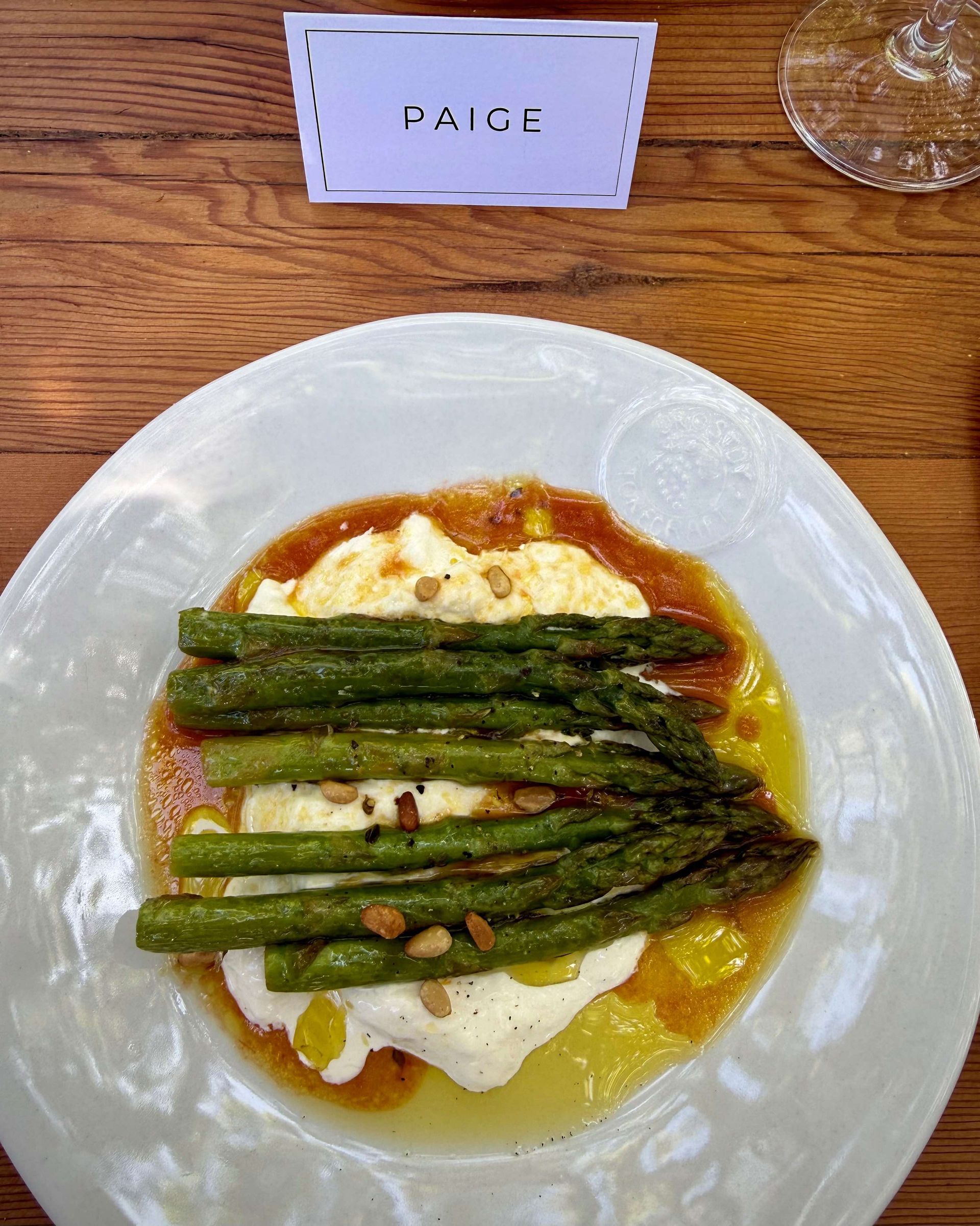
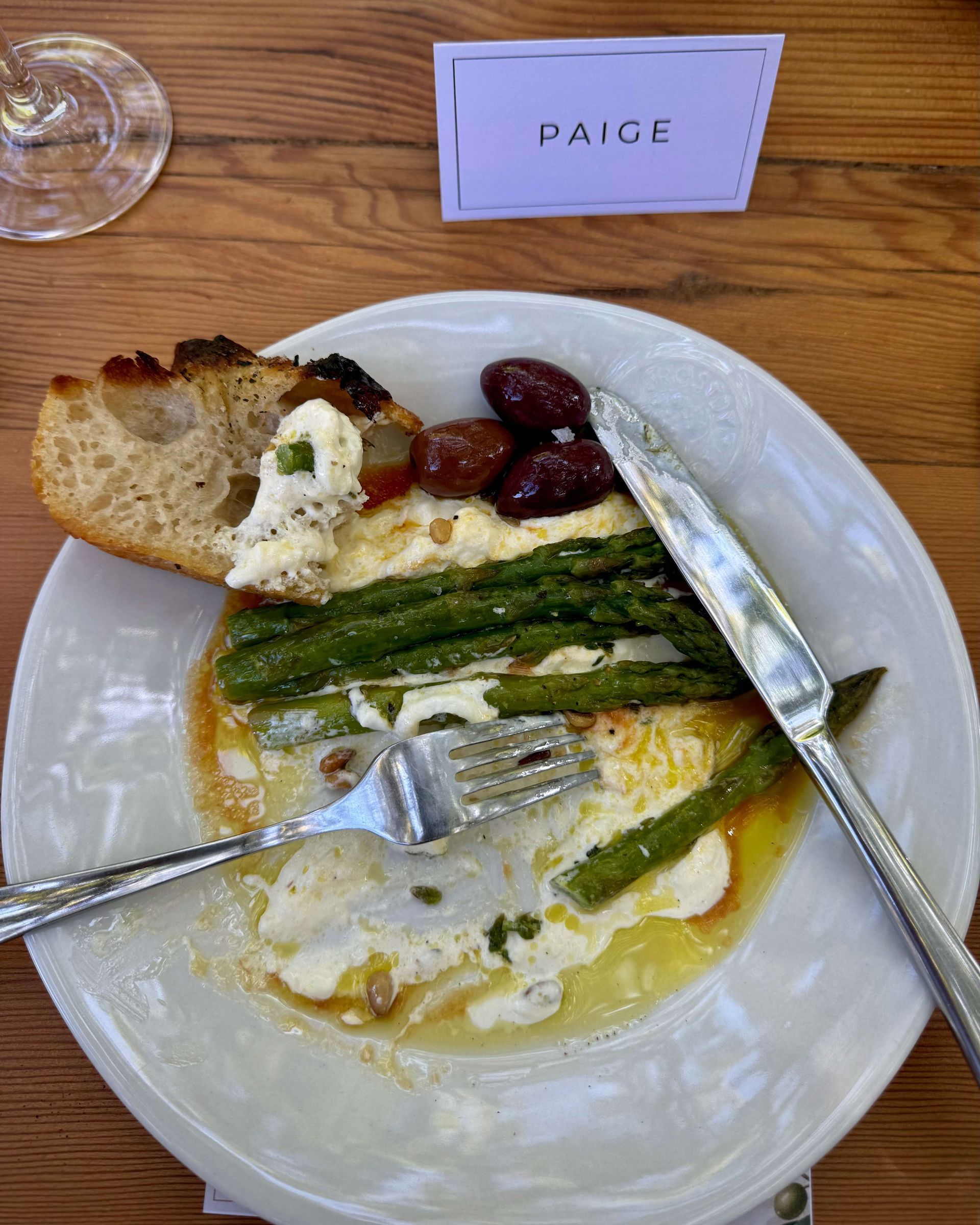
The asparagus was earthy and green, the stracciatella cool and creamy, and the blood orange brought exactly the sharp, citrusy lift the plate needed. Here, the Mission suddenly made more sense than it had in a blue tasting glass: it softened and rounded everything underneath without masking the fresher flavours.
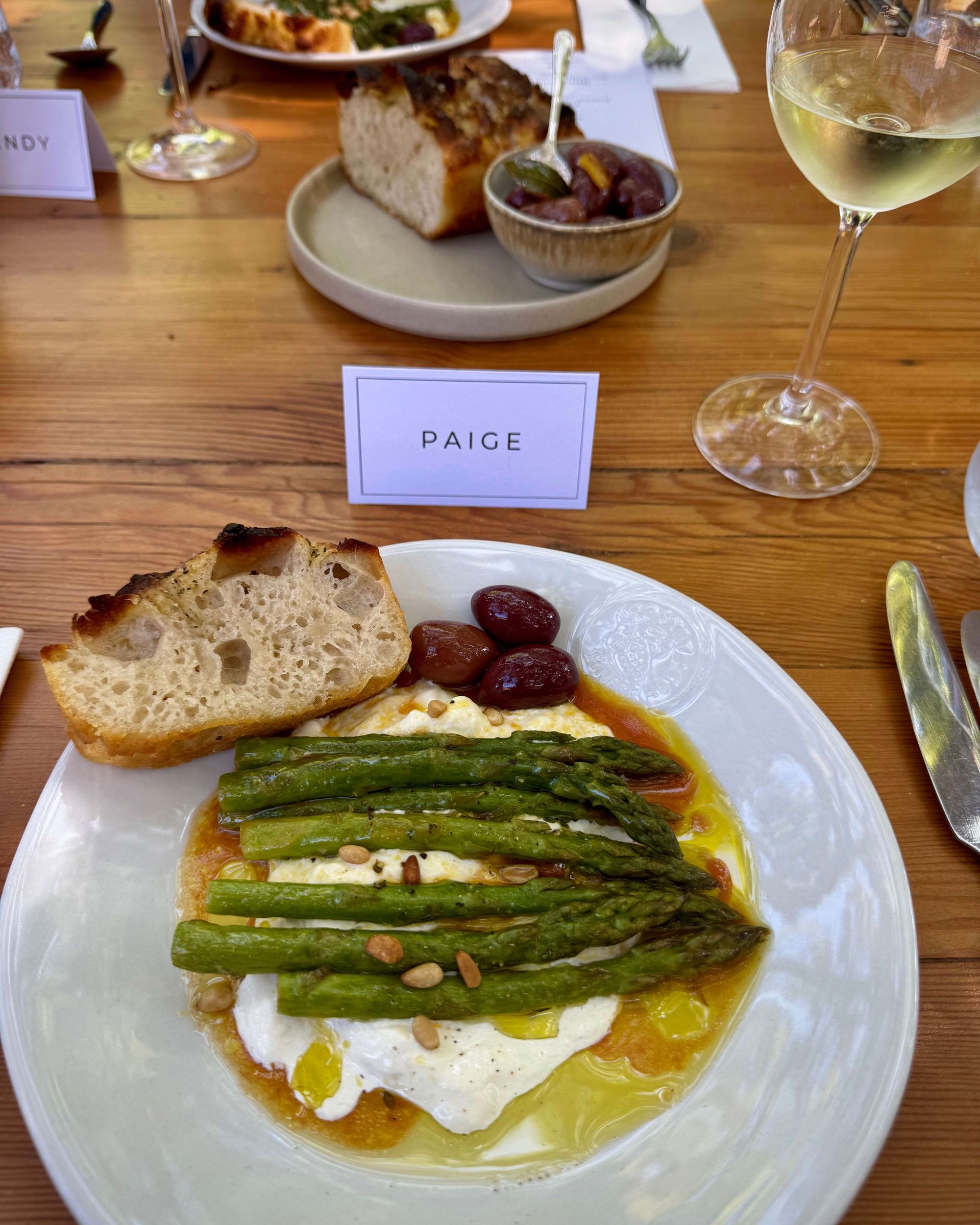
And then there was the focaccia: crisp and bronzed on top, soft inside, and sitting in the middle of the table like a direct challenge to anyone pretending they weren’t going to have another piece. My entirely unofficial method? Pile on some stracciatella and asparagus, drag it through the edges of the plate where the blood orange and olive oil had started mingling, add flaky sea salt and eat immediately.
Creamy, salty, bright, rich, fresh. You’re welcome.
Add cold white wine and a few olives beneath the trees and, for a moment, Stellenbosch felt suspiciously Mediterranean. Not exactly a hardship.
Soup Has Entered the Paige’s Page Cinematic Universe
If you have been following my articles this year, you may have noticed an unexpected character arc developing. Soup. I know. Thrilling stuff in the Paige’s Page cinematic universe. For years I had it filed under perfectly fine: useful when sick, occasionally excellent with bread. Then I started eating really good soup and, unfortunately for past me, it turns out soup can be f*cking fantastic.
This Is Now a Lot of Pressure for One Bowl
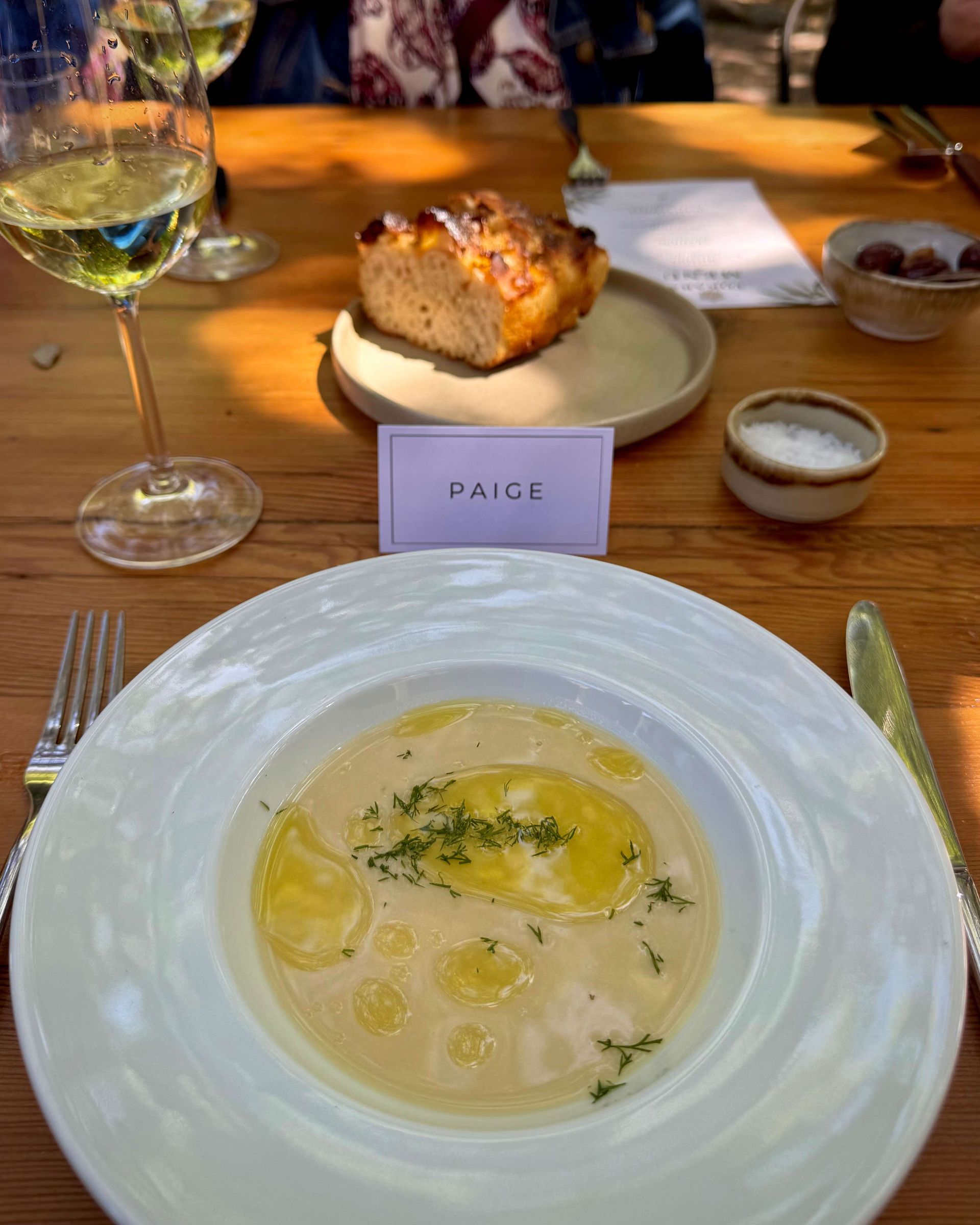
Anyway! Everyone around me had been talking about the white tomato soup since before we even sat down. “‘You have to try the soup.’ ‘The soup is amazing.’ ‘Wait until the soup.’” At a certain point I thought: okay. This is now a lot of pressure for one bowl. I was particularly intrigued by the white tomato part. Green tomatoes? Some obscure pale tomato I’d somehow missed during 27 years of eating? Nope.
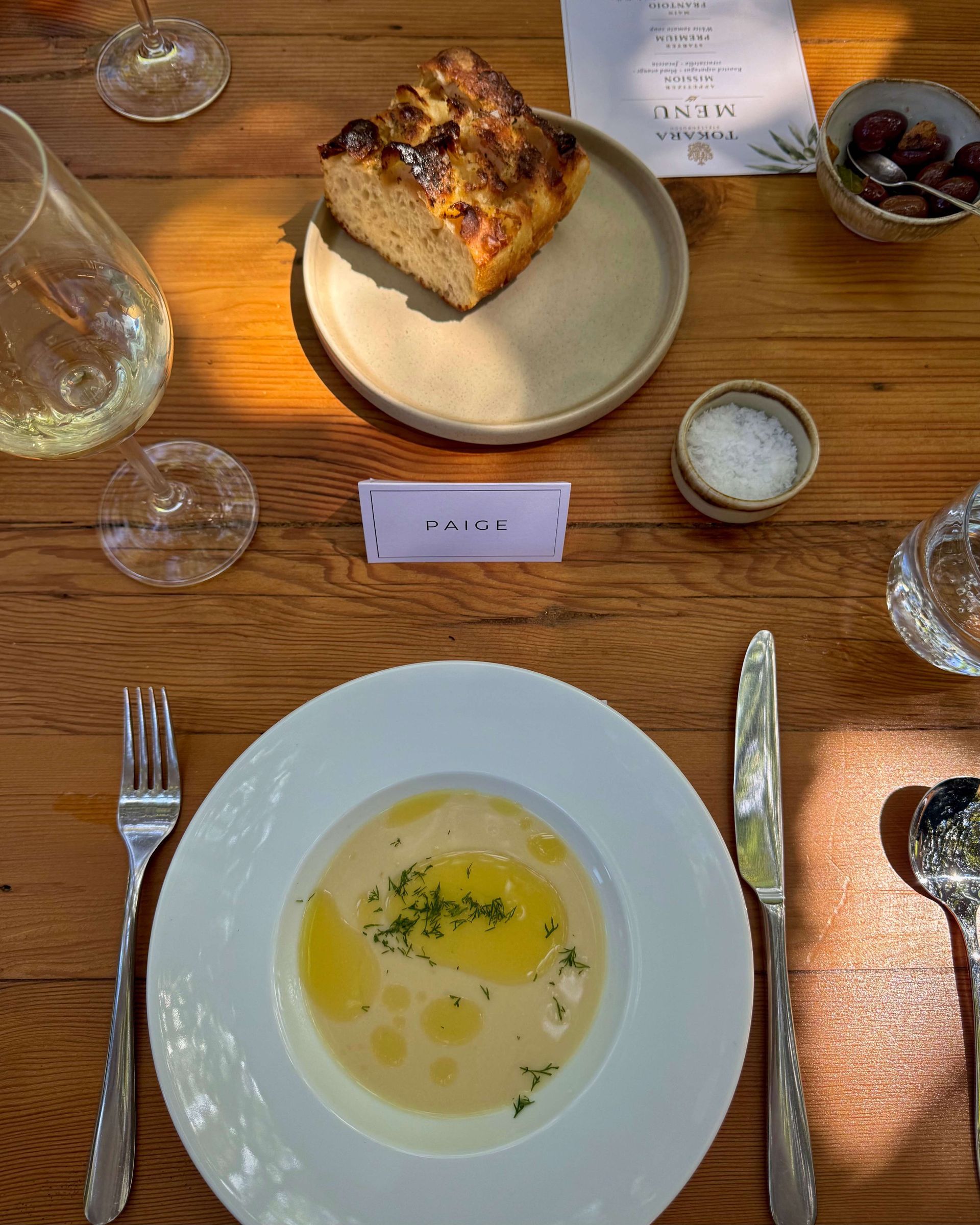
The recipe uses ripe cherry or small plum tomatoes, so when the bowl arrived pale, delicate and almost suspiciously innocent, I still wasn’t entirely sure what I was about to taste. I’d expected something thick. Thick with a Q. Instead it was remarkably light, almost broth-like, with flavour completely disproportionate to how delicate it looked.
It tasted like the very best point in a tomato’s life: naturally sweet, bright and gently tangy, without aggressive acidity. Then you’d catch one of the pools of Premium olive oil on top and everything became rounder, richer and more luscious. The oil lingered just enough to make the soup feel rounder and more luxurious without turning something so light into a heavy cream situation.
And, somewhat irritatingly, everyone had been right. The soup was bloody good. Maybe soup isn’t underrated anymore. Maybe we are finally rating it appropriately.
Three People Suddenly Have an Opinion on Bread
By the time the mains arrived, we had reached my favourite point in a long lunch: the moment everyone forgets they were strangers a few hours earlier. Small talk becomes ‘What’s the best thing you’ve eaten lately?’ Someone mentions a restaurant. Three people suddenly have an opinion on bread. Menus and ingredients are discussed with the seriousness normally reserved for international diplomacy. My kind of crowd.
It suited Good to Gather perfectly. This is very much their kind of lunch: slow, seasonal and built around gathering at a table rather than rushing through it. Some things arrived for you, others landed in the middle. Pass this. Try that. More?
I love that style of eating. Although I would like it formally recorded that I remain very supportive of having certain things entirely to myself. Balance.
The Lamb. Oh My Word.
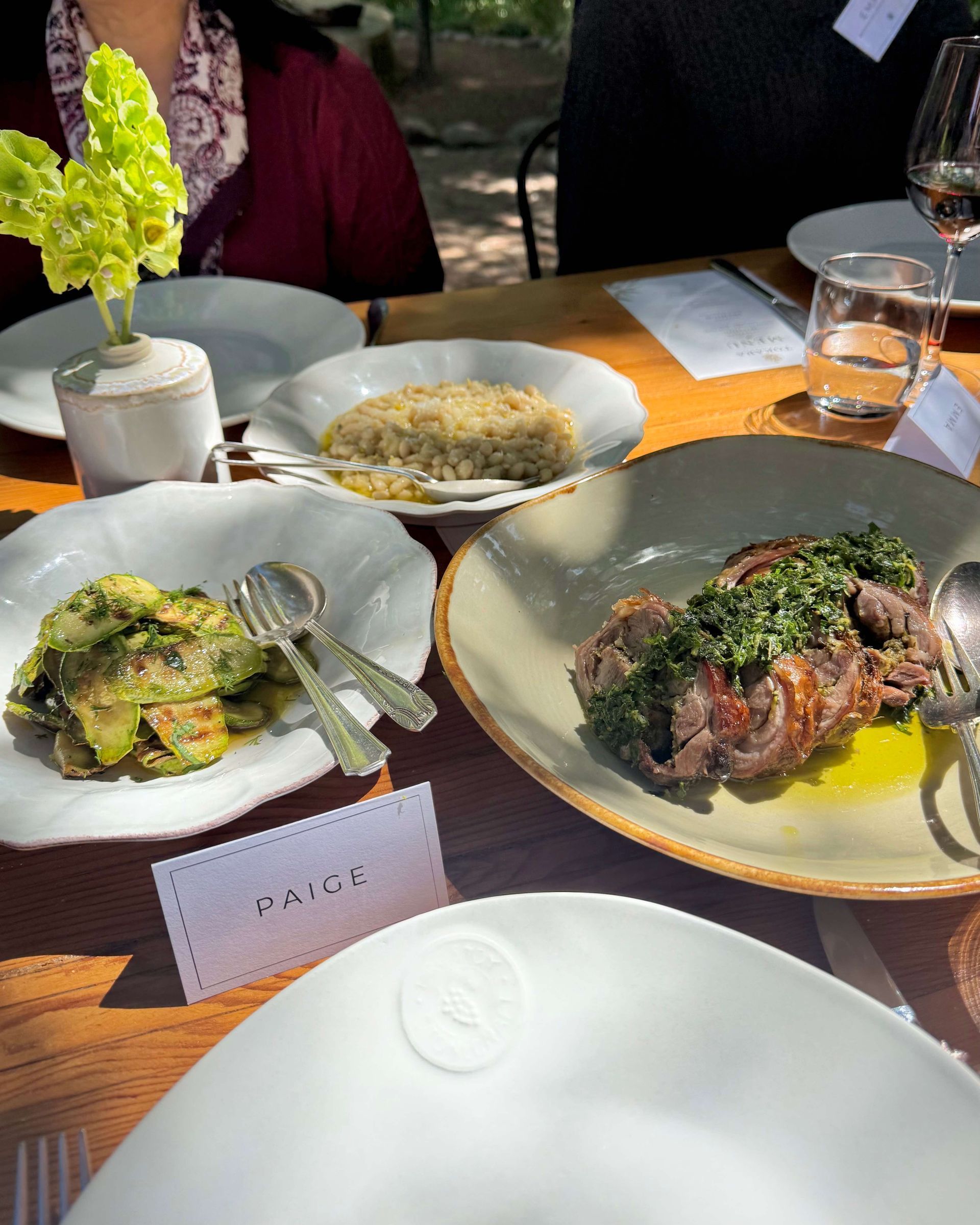
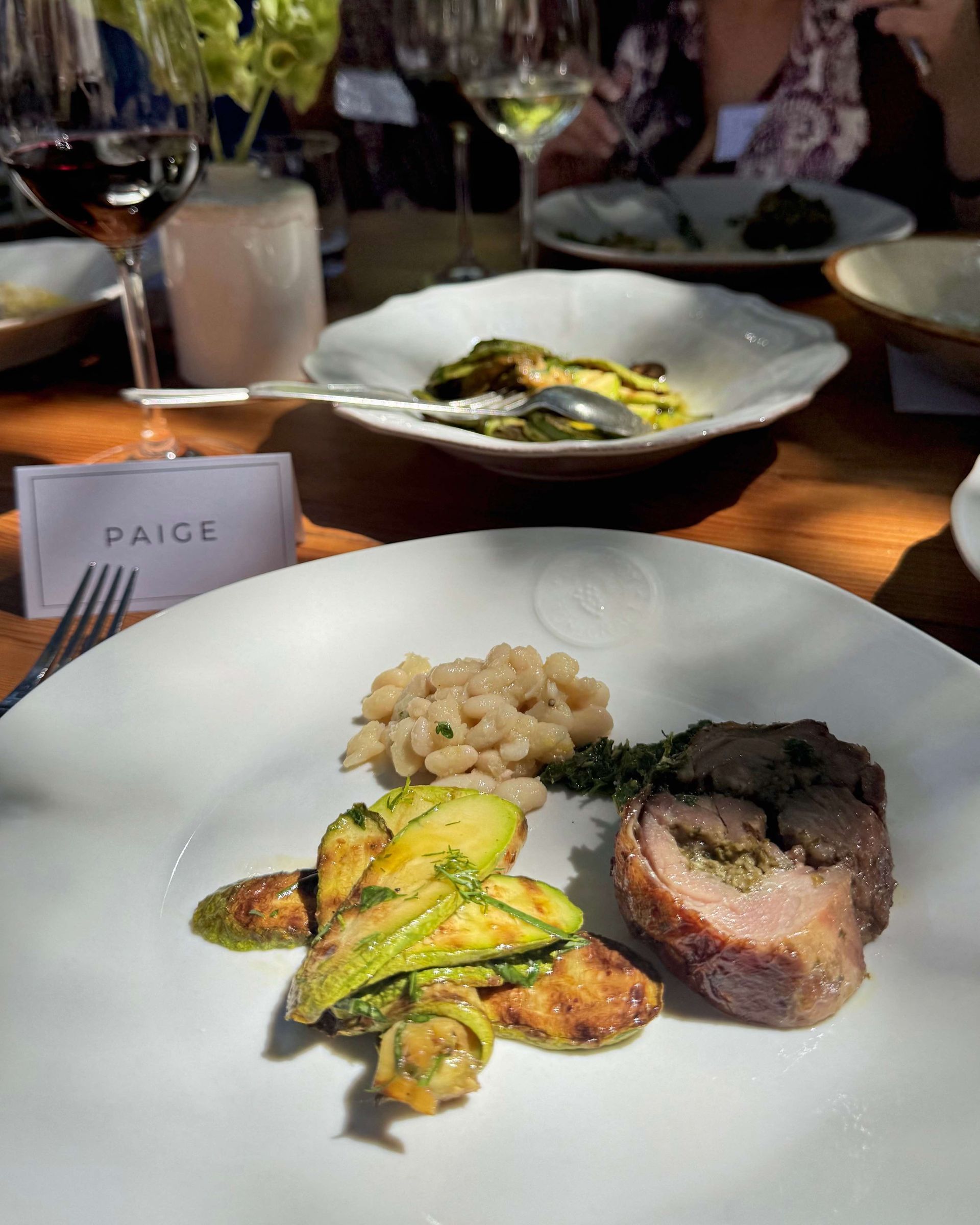
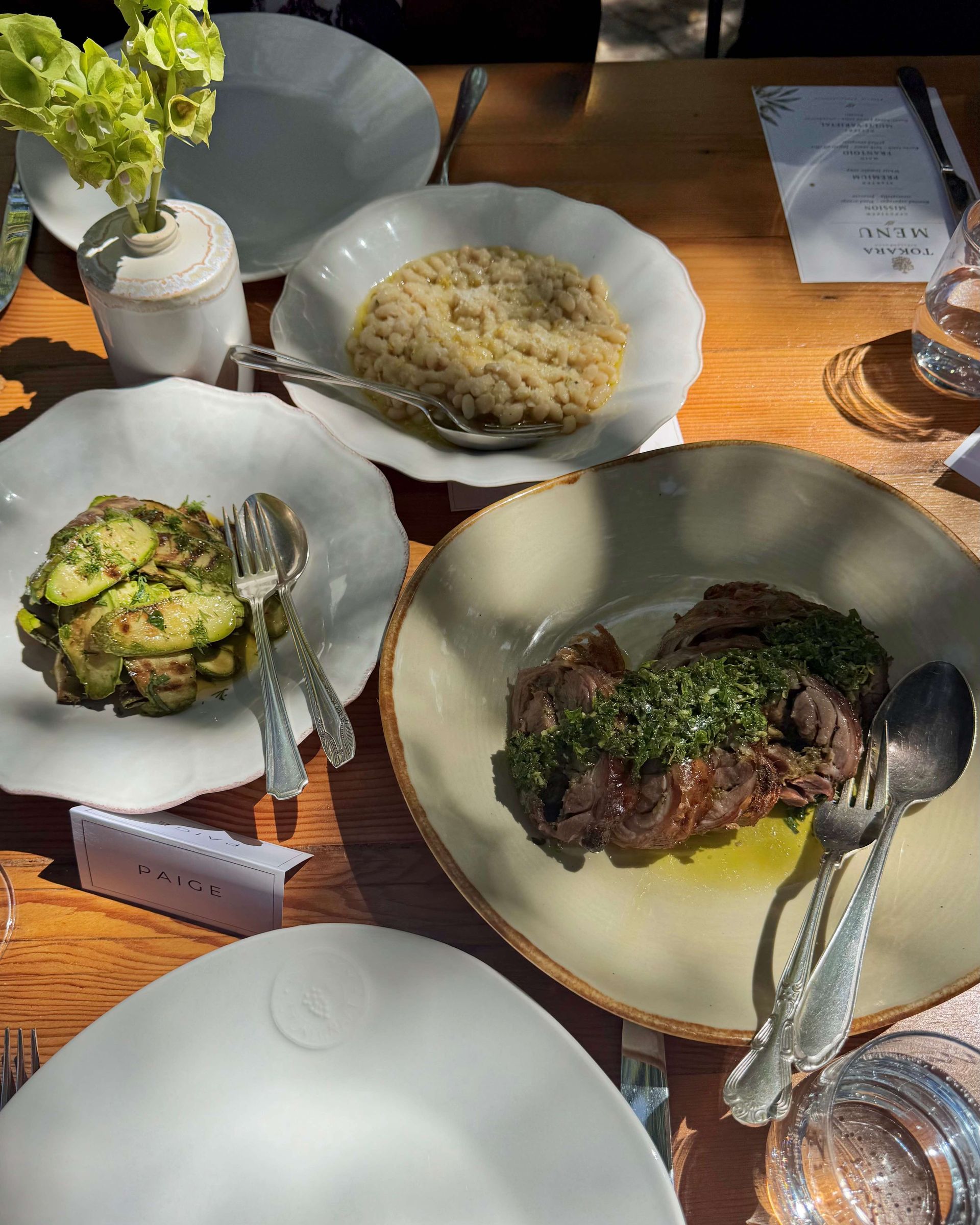
The white wine made way for red, and out came Karoo lamb with herb sauce, fagioli all’olio and grilled courgette, built around Tokara’s Frantoio. And oh my word. The lamb. Some of the best I’ve eaten in a very long time.
It arrived beautifully juicy, with dark caramelised edges and a gloriously green herb sauce over the top. This was where Frantoio made immediate sense: more robust and herbaceous than Mission, with enough green, peppery character to hold its own next to the lamb. It didn’t make the lamb taste oily. It carried the herbs, met the richness and left that little peppery finish behind.
Potatoes Do Not Need to Attend Every Meeting
Because potatoes do not need to attend every meeting involving meat, there was fagioli all’olio: soft, creamy beans made wildly more luxurious by olive oil. Beside them, courgettes charred at the edges but still with bite. Simple food, technically. Very, very good food in practice. Hearty without becoming heavy. Fresh without feeling remotely virtuous. Comforting without making you want to undo a button and lie horizontally beneath the nearest cork oak.
Just lamb, beans, courgettes, olive oil, red wine and a table of people considerably less like strangers than when the sangria appeared. Sitting beneath the trees, passing bowls around and talking about food with people who also consider lunch a legitimate afternoon activity rather than something squeezed between emails felt alarmingly close to my ideal afternoon.
A Completely Different Woman
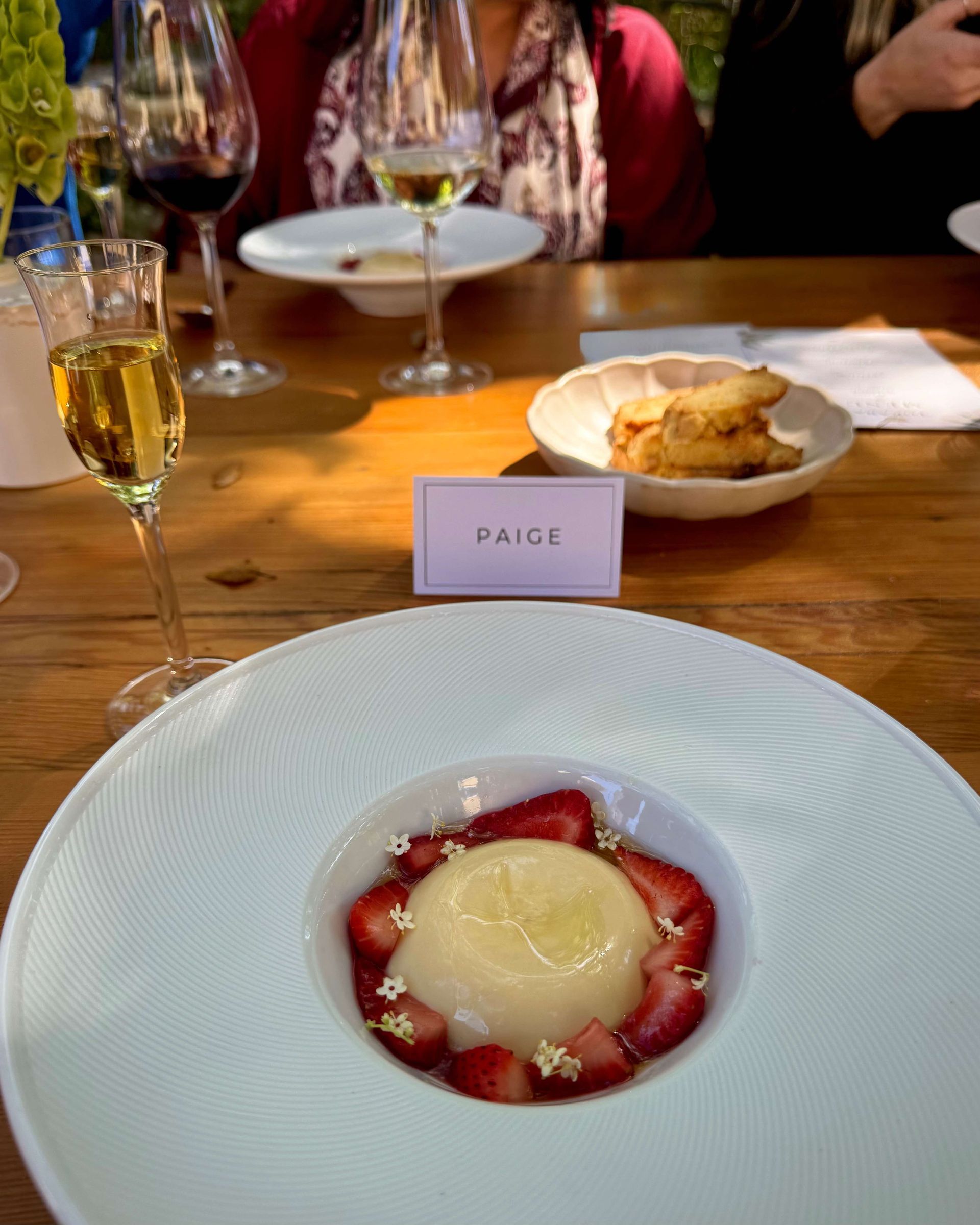
Then dessert arrived. And listen, I know panna cotta isn’t exactly new information. We know her. We like her. But burnt-honey panna cotta on a warm afternoon beneath the trees, after several hours of eating and talking nonsense with lovely people? A completely different woman.
This course brought us to Tokara’s Multi-Varietal: full circle from tasting the individual varieties to eating the blend. Character development. Education!
The panna cotta was cool, soft and properly wobbly, with that barely-there set where one aggressive table movement could alter the structural integrity of the whole situation. The burnt honey had me immediately because I am, and always have been, a honey girl. Floral, sticky, slightly complicated and made by bees, which already feels like overachievement.
The strawberries kept everything bright, but what I loved was seeing olive oil turn up in dessert and somehow make complete sense. It gave the panna cotta a glossy, luscious mouthfeel, then left that tiny peppery catch at the back of the throat. Several hours earlier I’d have called that ‘why is the olive oil attacking me?’ Now? Pungency. Look at me learning.
Olive Oil Was Clearly the Bride
And really, the whole menu had done that. The oils never felt like somebody had gone, quick, this is an olive-oil event, pour some oil on it. Each one genuinely changed the food in a different way. If this lunch were a wedding, olive oil was very clearly the bride. We had all gathered here today. There had been several outfit changes. Everyone else was simply there to support her.
There was also dessert wine, and I have long since accepted that I have absolutely no resistance to anything golden and slightly sticky in a tiny glass. Here, after burnt honey, strawberries and panna cotta, that sweet sip felt like dessert giving dessert a kiss goodnight.
Eight Years Old Again
Then the biscotti unexpectedly unlocked an entire childhood memory. My gran and I used to bake together, including homemade rusks, and if you’ve ever made them you’ll know there’s a particular stage between freshly baked and properly dried when you are technically supposed to leave them alone. I did not.
Before a rusk becomes a rusk, it’s this soft, cakey, chewy little miracle, and the biscotti reminded me of exactly that stage: enough crunch to be biscotti, but still a little chewy through the middle. Basically the chic Italian cousin of the half-dried rusk I used to steal from my gran’s kitchen. One minute you’re drinking dessert wine at an olive-oil lunch in Stellenbosch. The next you’re eight years old nicking something off a baking tray.
The Little Blue Glasses Win
Eventually, and extremely rudely, lunch had to end. But this really was one of those afternoons I could have stretched out for another five hours without complaint.
I genuinely left with a different appreciation for olive oil. Before this, it was something I loved, used and dipped irresponsible quantities of bread into. But tasting the oils properly first, learning what to look for, then watching those same characteristics behave completely differently alongside asparagus, tomato, lamb or panna cotta made the whole thing click.
Wine tasting gets all the attention while olive oil has apparently been sitting quietly in the corner with its little blue glasses waiting for us to catch up. Tokara actually offers olive-oil tastings, so if you’re not drinking wine, or you’ve simply done your 700th Cape Winelands wine tasting and fancy learning something completely different, there’s your next plan.
And because feeding and watering me all afternoon apparently wasn’t enough, I left with a beautiful box of olive oil, olives, tapenade, wine and other little pieces of the day. Spoilt rotten. No complaints.
Very, Very Good to Gather
More than anything, it was the feeling of the afternoon that stayed with me. Being around people genuinely excited by food. People who grow it, make it, cook it, pour it, talk about it and, most importantly, really enjoy eating it. No pretence. No taking ourselves too seriously. Just really good produce, really good food, lots of curiosity, a few too many refills and an afternoon beneath the trees that disappeared far too quickly.
Thank you so much to Tokara and Good to Gather for inviting me, feeding me, teaching me and sending me home extremely well looked after.
I arrived liking olive oil. I left wanting to host a tasting. So yes. Very, very good to gather.